← Back to Free Lessons
Conversation · Lesson 02
ما فهمتش؟ · Ma fhemtch?
💬 Asking for Help

How to Say “I Don’t Understand” in Tunisian Arabic

Learn how to ask for repetition, request slower speech, and keep a conversation going in Tunisian Arabic.
1. Listen first
2. Reusable chunks
3. Quick react
4. Live role-play
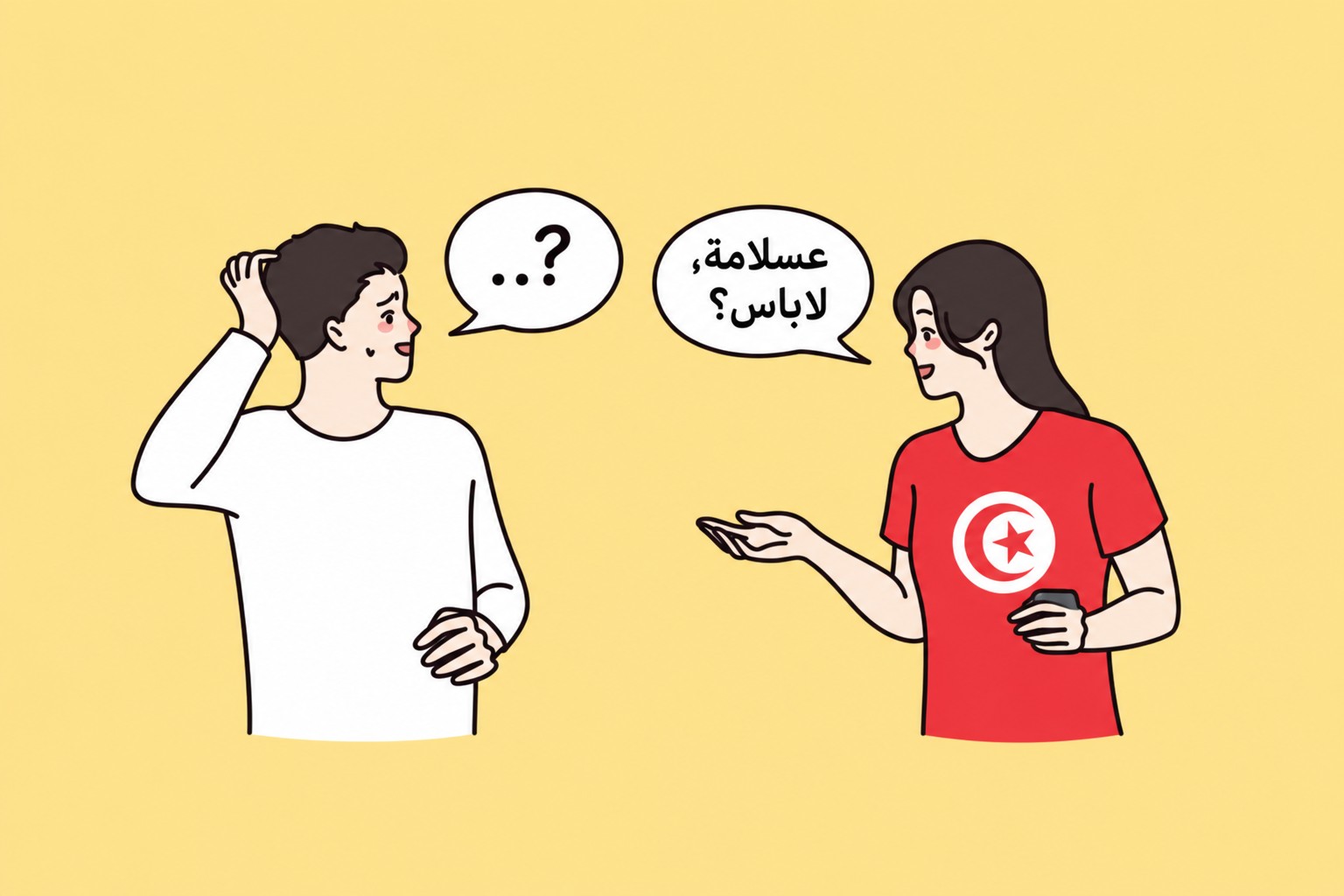
A Tunisian woman greets a learner who does not understand.
Step 01 & 02

The Mini-Dialogue

8 dialogue lines

Listen first: Listen before reading. Notice the sounds and rhythm, then open the transcript when you are ready.

Nour 3aslema Anna, n7eb nes2lek 7aja.
عسلامة أنَا، نحبّ نسألك حاجة.
Hi Anna, I want to ask you something.
Anna 3aslema! Tfaddhel, es2el.
عسلامة! تفضّل، اسأل.
Hi! Go ahead, ask.
Nour Win t7eb temchi el youm?
وين تحبّ تمشي اليوم؟
Where do you want to go today?
Anna Same7ni, ma fhemtch. Tnajjem t3awed?
سامحني، ما فهِمتش. تنجّم تعاود؟
Sorry, I didn’t understand. Can you repeat?
Nour Akid. 9otlek: win t7eb temchi el youm?
أكيد. قلتلك: وين تحبّ تمشي اليوم؟
Of course. I said: where do you want to go today?
Anna Tnajjem ta7ki b-chwaya?
تنجّم تحكي بشويّة؟
Can you speak slowly?
Nour Ey, behi. Win t7eb temchi el youm?
إي، باهي. وين تحبّ تمشي اليوم؟
Yes, okay. Where do you want to go today?
Anna Ah, tawwa fhemt! N7eb nemchi lel medina el 3arbi.
آه، توّا فهمت! نحبّ نمشي للمدينة العربي.
Ah, now I understand! I want to go to the old city.
Step 03

Useful expressions

Click to listen & repeat

Listen, repeat and practise these expressions in your own conversations.

ما فهِمتش Ma fhemtch
I didn’t understand.
Listen, repeat, then use it in your own conversation.
تنجّم تعاود؟ Tnajjem t3awed?
Can you repeat?
Listen, repeat, then use it in your own conversation.
اتفضِّل Etfaddhel
Go ahead.
Use this to invite someone to speak or ask a question.
أحكي بشويّة A7ki b-chwaya
Speak slowly.
A direct request to slow down.
سامحني Same7ni
Sorry / Excuse me.
Listen, repeat, then use it in your own conversation.
توّا فهمت Tawwa fhemt
Now I understand.
Listen, repeat, then use it in your own conversation.
باهي Behi
Okay / good.
A common way to acknowledge or agree.
Step 04

Conversation Patterns

Try your own answer

Build a polite request: tnajjem → action.

Pattern 01 · Repeat

تنجّم تعاود؟

Tnajjem t3awed?

Can you repeat?

Pattern 02 · Slow down

تنجّم تحكي بشويّة؟

Tnajjem ta7ki b-chwaya?

Can you speak slowly?

Pattern 03 · Invite someone to speak

اتفضِّل

Etfaddhel

Go ahead.

Step 05

Listen & Choose: Train Conversational Reaction

Listen and choose
Step 06

What Would You Say?

No multiple choice

Say your answer aloud before revealing the model.

You did not understand. Ask for repetition.

Nour is speaking too fast.

Now you understand. What do you say?

Step 07

Conversation Builder

Arrange in natural order

Click the pieces below in the order a natural Tunisian conversation flows from the opening to understanding.

Click pieces below to assemble your conversation...
Step 08

Role-Play: Your Turn!

Final Challenge
🇹🇳

Virtual Encounter with Nour (نور)

Nour will guide the conversation. Look at your prompt objective and respond to her directly!

M
Nour

وين تحبّ تمشي اليوم؟

Win t7eb temchi el youm?

Your Objective: Step 1 of 3

Say you did not understand and politely ask Nour to repeat.

🇹🇳
Cultural Insight

المدينة العربي · El medina el 3arbi

In Tunisian conversation, المدينة العربي refers to the medina: the historic old part of town. Picture narrow lanes, traditional houses, small shops and souks. Here, the phrase means “the old town,” rather than a separate city. Use نحبّ نمشي للمدينة العربي (N7eb nemchi lel medina el 3arbi) to say “I want to go to the medina.”

Rate this lesson

Your voice matters

How was this lesson?

Share a thought, ask a question or tell me what could be clearer.

Your rating · optional

Choose a rating or write a comment. Opens a new tab to verify and send privately to us through FormSubmit. Only feedback you allow us to publish may appear here after review.

Need help? Email Us. Keep personal information out of your comment.

Audio playing...